Showing posts with label Tennyson. Show all posts

Monday, April 2, 2018

The Sword and the Water

Should Bedivere have kept Excalibur? 

Bedivere thinks that keeping Excalibur would do much more for Arthur's legacy than throwing it back into the lake. If he kept it, we might've actually have definitive proof that Arthur and Camelot had existed. He had already disobeyed Arthur twice and each time he returned, the king was closer to death.

Should he have just waited for Arthur to die and held on to the sword, disobeying his king's final wish? 

Did history lose out on one of its greatest treasures because Bedivere remained loyal to Arthur, even as he was bleeding out and possibly delirious?


Sunday, April 1, 2018

Happily Ever After?

The theme of moral decay is emphasized in the Passing of Arthur. Arthur’s last mission request is for Sir Bedivere to cast the sword, Excalibur, into the lake.  However Bedivere tries to hide the sword, disobeying the kings command and lied about it twice. As a loyal knight from Arthur’s court, the reader would expect him to obey the king’s last wishes. But as Arthur is slowly dying, so are the moral values he invested. The dark symbolism of nature in this poem supports the feeling of evil, failure, and desolation, in the middle of winter with no other surviving knights of the round table. Before the king sailed away, Bedivere asks Arthur what is to become of him now that the Round Table is destroyed and justice has vanished from the world. Arthur answers by saying that with him gone, it leaves room for the new to be placed, and to sends prayers for his soul. It seems that all the virtues and high morals of the kingdom have vanished, but the rising of a new sun gives hope for a similar future. 
Image result for the darkest nights are only dakr till morning

Friday, March 30, 2018

Sir Bedivere wants them gems

My discussion question is: why would Sir Bedivere finally decide to hurl Excalibur into the lake on his third visit? If he doesn't do it his first two times, then what made him decide to throw it on the third? He has to have known that King Arthur wasn't serious about his threat.


Wednesday, March 28, 2018

The Lady of Shalott

Tennyson tells a tragic tale of disappointment in The Lady of Shalott. This near-mythical woman is cursed to a very minimalist, monotonous life, but "she knows not what the curse may be" (42) should she leave. Tennyson shows through the poem that the Lady is waiting for true love, evidenced when he mentions that she "hath no loyal knight and true" (62), and again when she sees the newlywed lovers and proclaims "'I am half sick of shadows'" (71). So, did Lancelot inspire her to leave the island (and potentially ruin/lose her life), or was she just waiting for someone to give her that nudge? Lancelot says in Malory's text "God knows that I did not intentionally lead her to this....alas! she loved too much" (471), but I'm not sure if the same can be said for the Lady in Tennyson's poem.

The Dullness of Shalott

Parts I and II of Tennyson's "The Lady of Shalott" highlights the contrast between the island of Shalott and the surrounding lands. The reader learns that "Four gray walls, and four gray towers, / Overlook a space of flowers, / And the silent isle imbowers / The lady of Shalott" (15-18). Tennyson reveals little else about Shalott itself, though that the Lady of Shalott has "little other care" than her weaving (44) implies that there is little else to say about Shalott. It is a dull and featureless island that most people pass right by without noticing; only the nearby reapers ever remark on "the fairy / Lady of Shalott" (35-36).

The second and third stanzas of Part II list people who pass by Shalott while going to and from Camelot. For example, "Sometimes a troop of damsels glad, / An abbot on an ambling pad, / Sometimes a curly shepherd-lad, / Or long-hair'd page in crimson clad" each go by within a single line of verse (55-58). The quickness with which Tennyson presents these people conveys the fullness of activity not far from the island. The highway to Camelot is energetic, noisy, bustling, and exciting. However, all that our poor Lady gets to see of this is shadows in her mirror. Looking at the liveliness right outside her window is too big a risk. She must remain in the dullness of Shalott.


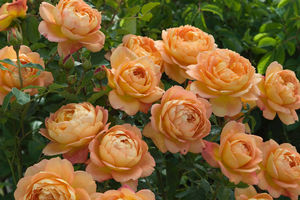
Did you know that there is a Lady of Shalott flower?

Monday, March 26, 2018

Elaine or Rapunzel?


Aside from the fact that this is just a peppy song in general, I couldn't help but compare Rapunzel to the Lady of Shalott from the poem. Like Rapunzel, our Lady starts out pretty positive about her experience, but then you start to see how isolated, lonely, and bored she is. Plus, they're both shut up in towers singing their hearts out, which obviously makes them the same person.